Your First Solo Vacation Over 40: Mental Preparation

Reading time: 9 minutes
Your first solo vacation over 40 is coming up and you feel that tingle, a mix of excitement and quiet uncertainty? That's completely normal. According to a 2023 study by the German Travel Association (DRV), around 42 percent of all first-time solo travelers over 40 have reservations about their first trip alone. The good news: with the right mental preparation, your solo adventure becomes a liberating experience that strengthens your self-confidence for the long haul.
This guide gives you a practical checklist to prepare mentally for your first solo vacation, overcome fears in a targeted way and start out with confidence. You'll learn not only which inner blocks are typical, but also how to turn them into motivation.
Why Now Is the Right Time for Your First Solo Vacation Over 40
At 40 or older, you bring life experience that younger solo travelers don't have. You know your needs better and know what really matters to you. In 2022, Germany's Federal Statistical Office counted around 18.2 million people between 40 and 60 in Germany, a huge group of potential solo travelers. Many of them are taking the step right now because family obligations are easing or new freedom is opening up in their careers.
The trend is clear: traveling alone is becoming more socially accepted. In 2023, the booking platform Booking.com published figures showing that 38 percent of its users over 40 plan at least one solo trip per year. So you're not alone in your wish for independence and new experiences.
Recognizing and Dissolving the Most Common Mental Blocks
Before you pack your bags, it's worth taking an honest look at your inner brakes. Most fears about a first solo vacation over 40 fall into four categories:
Fearing Loneliness and Social Isolation
Many imagine sitting alone in a restaurant in the evening and feeling left out. Reality looks different: studies from the University of California Berkeley showed in 2021 that solo travelers on average have more authentic conversations with locals and other travelers than couples or groups. People are more likely to approach you when you're traveling alone.
A concrete tip: for your first solo trip, book accommodation with common areas, such as a boutique hotel with a lounge or an adults-only guesthouse. That's where relaxed connections form at breakfast or over sunset drinks. On trips, you can even meet like-minded people in advance so you don't arrive completely alone.
Safety Concerns and Feeling Overwhelmed in Everyday Situations
Making all the decisions yourself without a travel partner can seem scary. But this is exactly where the chance for self-empowerment lies. Prepare concretely: download offline maps to your smartphone, note the emergency numbers of the U.S. embassy at your destination, and share your itinerary with someone you trust.
The right emergency preparedness for solo adventurers takes away a lot of uncertainty. One example: the app "TripWhistle Global SOS" provides emergency numbers worldwide and works offline, so in an emergency you have immediate access to local help.
Social Judgment and Stigma
Some fear comments like "Nobody wanted to come along?" or "Aren't you too old to travel alone?" These prejudices exist mostly in our own heads. In fact, most people admire the courage to take on solo adventures. A Skyscanner survey found in 2022 that 67 percent of respondents see solo travelers as especially self-confident and inspiring.
Practice a confident answer: "I enjoy the freedom of deciding spontaneously what I want to experience." Period. You owe nobody a justification for your decision.
Perfectionism and Expectations That Are Too High
Your first solo vacation over 40 doesn't have to be perfect. Many put pressure on themselves to make the most of every minute and not make any "mistakes." Let go of that expectation. Deliberately build in buffer time when nothing is on the schedule. Boredom is part of travel, and often that's exactly when the best chance encounters happen.
Your Practical Checklist for Mental Preparation
These steps help you start your first solo trip mentally strengthened. Work through them systematically in the weeks before departure:
- Visualize positive moments: every night before falling asleep, picture three concrete situations in which you feel good on your trip, such as at sunrise on the beach or reading in a relaxed café.
- Write down your fears: take a sheet of paper and list all your worries. For each fear, jot down a realistic solution or alternative. That takes the power out of vague worries.
- Test being alone on a small scale: before the big trip, go out to eat alone a few times, go to the movies or take a day trip solo. That way you get used to the feeling step by step.
- Build a safety net: agree on regular check-ins with someone you trust via WhatsApp or Signal. That gives both sides a reassuring feeling.
- Choose the right destination to start with: for your first solo vacation over 40, destinations with good infrastructure and lots of other solo travelers are a good fit, such as Lisbon, Malta or island hopping in the Mediterranean.
- Collect wins in advance: master small challenges in everyday life on your own, like assembling a piece of furniture or trying a new sport. Every success boosts your confidence for the trip.
Solo Trip Planning: The Balance Between Structure and Spontaneity
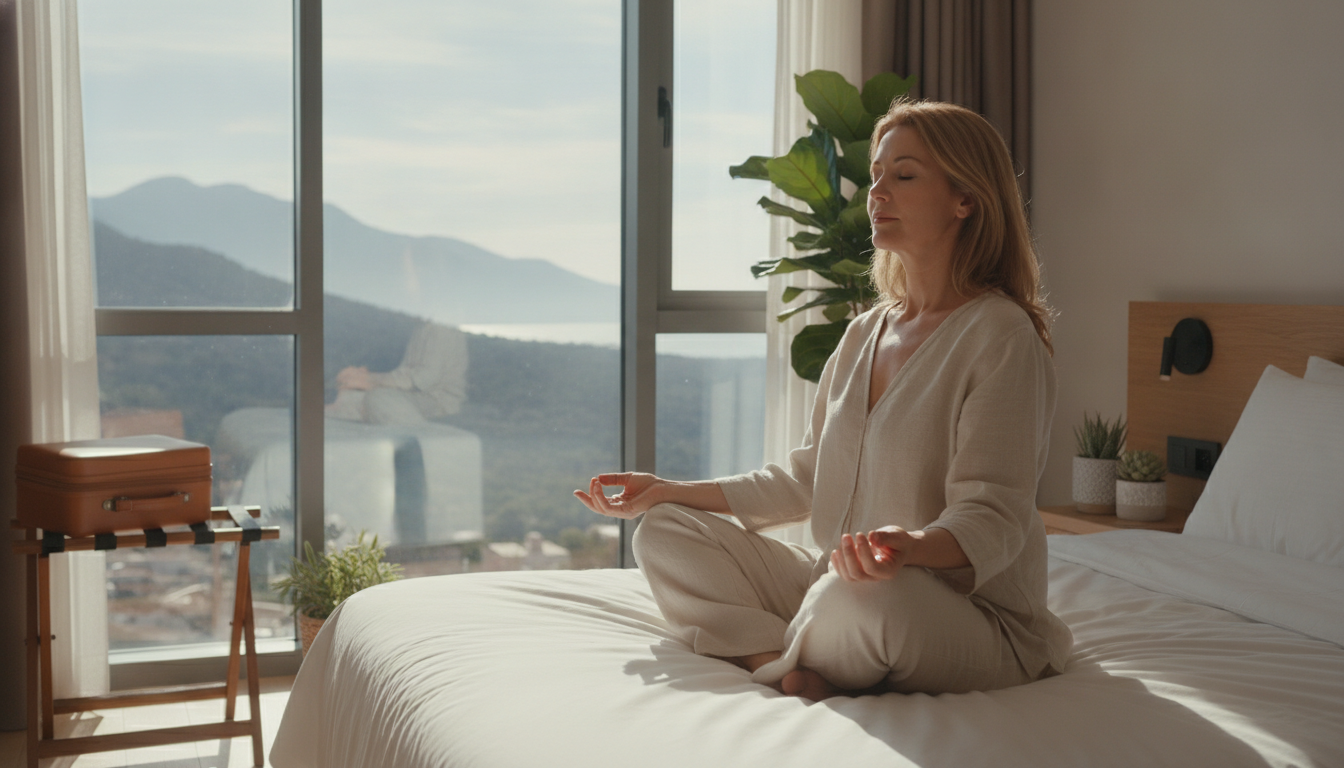
When it comes to concrete trip planning, opinions differ: some swear by detailed daily plans, others want to stay as spontaneous as possible. For your first solo vacation over 40, a middle path is recommended. Plan the basics firmly: travel, accommodation, maybe one or two highlights per destination. You deliberately leave the rest open.
The psychologist Dr. Tamara McClintock Greenberg of the University of California San Francisco emphasized in her 2020 study on travel stress that a "flexible framework" is the ideal balance for first-time solo travelers. Too much planning creates pressure, too little structure can be overwhelming.
A practical example: if you're traveling to Barcelona for five days, book your hotel in advance and a guided Gaudí walking tour for day two. The remaining days stay open for spontaneous discoveries, tips from locals or simply a lazy day at the beach.
Mental Techniques on the Road: When Uncertainty Creeps In
Even with the best preparation, moments of uncertainty can arise on the road. For those you need mental tools you can use at any time.
The 5-4-3-2-1 Method for Feeling Overwhelmed
This mindfulness exercise brings you back to the here and now from stressful situations. Name aloud or in your head: 5 things you see, 4 things you feel, 3 things you hear, 2 things you smell, 1 thing you taste. After two minutes you feel grounded and more able to act.
The Success Journal for the Road
Take five minutes each evening and note three things that went well, however small. "Didn't get lost in the metro system," "Nice chat with the barista" or "Bravely jumped into the cold sea." These positive anchors strengthen your confidence every day.
The Exit Strategy for Uncomfortable Situations
Think up a polite exit in advance for typical scenarios. If a conversation gets uncomfortable: "Excuse me, I have a video conference in a moment." With pushy vendors: a friendly "No, thank you" and keep walking without making eye contact. Mental scripts like these give you security.
The First Night Alone in the Hotel: Mastering a Special Challenge
Many report that the first night is the biggest hurdle. Suddenly you're truly alone in an unfamiliar environment. Deliberately plan something calming for that evening: a familiar book, an episode of your favorite series or a video call with someone close to you.
In her 2023 e-book "Solo Travel Mindset," the travel blogger Jana Kalea recommends booking an especially cozy accommodation for the first night, even if it's a bit more expensive. That feel-good factor makes settling in enormously easier. Alternatively, you can also consider room sharing on singles trips to ease gently into traveling alone.
After You're Back: Integrating the Experience

Your first solo vacation over 40 doesn't end when you land at your home airport. Mental follow-up is just as important as preparation. Take time to reflect on what you experienced. What surprised you? Which fears were unfounded? Where did you grow beyond yourself?
Create a small memory book or a digital folder with photos and notes. This documentation serves as a powerful resource for future challenges, and not only in a travel context. You have proof that you can overcome uncertainty and master new experiences on your own.
Frequently Asked Questions About Your First Solo Vacation Over 40
How long should my first solo vacation over 40 last?
Four to seven days is ideal to start. That span is manageable enough not to feel overwhelmed, but long enough to really arrive and immerse yourself in the experience. Gradually lengthen later trips.
What do I do if I get strong homesickness on the road?
Homesickness is normal and not a sign of weakness. Allow yourself the feeling instead of fighting it. Call familiar people, treat yourself to something familiar like your favorite food, or visit a place that reminds you of home, such as a park or a library. The intense feeling usually passes after a day or two.
Should I take my first solo trip domestically or abroad?
That depends on your comfort zone. A domestic trip reduces language barriers and cultural uncertainties, but may give less of a sense of real adventure. Nearby European destinations like Austria, the Netherlands or Portugal offer a good compromise: foreign enough for something new, familiar enough for security.
How do I deal with it when others criticize my decision to travel alone?
Criticism says more about the other person's fears and projection than about you. Stay friendly but firm: "I'm looking forward to this experience and I'm curious what I'll discover." Look for allies instead, online in forums or among people who also go on vacation as singles.
What do I do in case of panic or anxiety during the trip?
Immediately apply the 5-4-3-2-1 method or practice deep belly breathing: breathe in for four seconds, hold for seven seconds, breathe out for eight seconds. Repeat five times. Then find a quiet, safe place, such as your hotel room or a café. If the panic persists, contact your country's embassy (for U.S. citizens, the nearest U.S. embassy or consulate) or a local emergency service. The number of Germany's crisis hotline (Telefonseelsorge) also works abroad: +49 800 111 0 111.
Conclusion: Your First Solo Vacation Over 40 as a Starting Point for More
Mental preparation for your first solo vacation over 40 isn't a one-time checklist but a process of self-empowerment. You learn to listen to your inner voice, to see fears as information rather than as a barrier, and to build trust in your abilities. Every small bit of preparation, from visualizing positive moments to practical emergency planning, feeds into your self-confidence.
The statistics are clear: you're part of a growing movement of people over 40 who have the courage to try new paths. Your first solo trip won't be perfect, and that's exactly what makes it valuable. The challenges you master become stories that stay with you for a long time.
Start your mental preparation now: tonight, write down your three biggest fears and note a concrete solution strategy for each. That first step already brings you closer to your adventure. And when you return, you won't just have seen new places, you'll also have met a stronger version of yourself.