Room Sharing on Singles Trips: Save Money by Sharing
Reading time: 9 minutes
Anyone who travels alone knows the problem: single supplements of 30 to 100 percent on the base price quickly turn a vacation into a luxury good. That's exactly where room sharing on singles trips comes in - a clever solution that not only spares your wallet but often makes new acquaintances possible too. On a study tour to Sicily in September 2023, participants with a shared double room paid an average of $1,600, while the single room came to $2,300.
This article explains exactly how room sharing on singles trips works, which providers offer this option and who really benefits from sharing a double room. You'll learn specifically what to watch for when booking and how to find the right roommate.
What Does Room Sharing Actually Mean and How Does Booking Work?
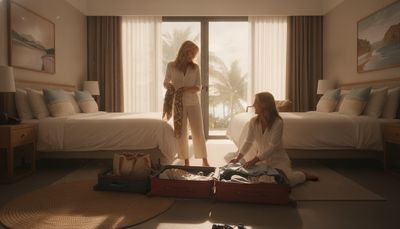
With room sharing on group trips, you deliberately book a double room to share with another person of the same sex. The tour operator arranges a suitable roommate, usually based on age and interests. Specialized providers such as Sunwave or Adamare have developed their own matching systems that ask about preferences at sign-up.
The booking process starts with your registration for the trip you want. You indicate that you prefer a shared double room. The operator then looks for a suitable person among the bookings. If no partner is found, you often automatically get a single room at a reduced supplement or even for free - you should get this guarantee confirmed in writing beforehand.
The cost savings on group trips are typically 25 to 40 percent compared with the single room price. On a two-week hiking trip to Madeira in spring 2024, the shared room cost $1,850 per person, while solo travelers paid $2,500 - a saving of $670.
Which Providers Offer Room Sharing and How Do Their Concepts Differ?
Various operators have added room sharing to their programs, with different emphases. Since 2019, the German operator Wikinger Reisen has offered the option "double room for single occupancy at half the supplement" on selected hiking and active trips, which effectively amounts to a sharing model. According to the company, about 18 percent of solo travelers use this variant.
Sunwave has established the "twin-share" concept, in which like-minded people are matched up deliberately. The company arranges matches after a questionnaire that asks about sleeping habits, tidiness and preferred bedtimes. On a yoga trip to Crete in June 2023, the success rate of the matching was 92 percent, according to the operator.
Larger providers such as TUI or Studiosus have followed suit. In 2022, Studiosus introduced "double room sharing" on 15 selected cultural trips, including trips to Andalusia, Tuscany and the south of France. According to an internal evaluation from 2023, demand rose by 34 percent compared with the previous year.
Who Is a Shared Double Room Really Worth It For?
Room sharing suits you ideally if saving money is a priority and you're open to new contacts. Especially on group trips for singles, there's often a double benefit: you save money and may find a travel friend for future trips.
Three groups of people benefit especially from a shared room:
- Active travelers who are rarely in the room anyway and mainly use the daily program - on hiking, cycling or diving trips, for example
- Spontaneous travelers who book at short notice and are flexible about their roommate
- First-time bookers of singles trips who want to test the format without risking high extra costs
Room sharing is less suitable for people with a strong need for retreat, pronounced sleep disorders or very specific standards of tidiness. If you like to read late into the evening or want to go to bed early, you should prefer the single room option. A 2023 survey by the German Travel Association showed that 41 percent of respondents aged 50 and over named privacy as the most important travel criterion.
How Do You Find the Right Roommate in Advance?

Communicating in advance with your future roommate minimizes surprises considerably. Reputable operators provide contact details after a successful match, usually 4 to 6 weeks before departure. Use this time for a phone call or a video call.
Proven strategies for getting to know your travel partner in advance include concrete questions about daily rhythm, temperature preferences when sleeping and tidiness habits. A participant on a trip to Georgia in autumn 2023 reported that a 20-minute phone call beforehand cleared up all uncertainties and led to a harmonious room situation.
Some operators offer Facebook groups or WhatsApp chats for booked trips. There you can start connecting with all your fellow travelers weeks beforehand and possibly find a suitable roommate yourself. On a trip to Iceland in August 2023, 6 of 18 participants found each other as roommates on their own through the trip's WhatsApp group.
What Are the Pros and Cons of Room Sharing in Everyday Life?
The most obvious advantage is the cost savings. On a two-week tour through Portugal, you can save an average of $550 to $775. Then there's the social aspect: many roommate pairings develop into travel friendships that last beyond the vacation.
Another plus is mutual support. When packing, finding your way or if someone has forgotten something, your roommate helps out. A 2022 study by the University of Salzburg on group travel dynamics showed that participants who shared rooms were 23 percent more likely to say they felt safe and looked after.
You shouldn't underestimate the downsides, though. Different sleep rhythms can be disruptive if one person is an early riser and the other likes to sleep in. Different ideas of tidiness or hygiene standards sometimes lead to tension, too. In a survey of 340 singles travelers, 17 percent said they'd rather book a single room next time.
Willingness to compromise is needed: ventilation habits, light sensitivity while sleeping and bathroom schedules require agreements. If you struggle with that, you should look for alternatives to avoid the single supplement, such as booking early or last-minute deals.
What Should You Pay Attention to When Choosing a Room and Reading the Terms and Conditions?
Check the room category carefully for a shared double room. Some operators only offer rooms with two single beds, others also double beds with separate mattresses. Room size varies considerably: standard double rooms are often only 195 to 235 square feet, while comfort rooms offer 280 to 325 square feet.
In the terms and conditions, pay particular attention to the cancellation terms for room sharing. If your partner cancels at short notice, you may face extra costs. Reputable providers such as Wikinger Reisen guarantee in writing that you won't automatically have to pay the full single supplement, but at most 50 percent of it.
Also clarify the arrangement in case of incompatibility. Good operators allow a room change within the first 48 hours at no extra charge, as long as an alternative room is available. This flexibility should be stated explicitly in the contract.
Find out about extras such as safe use, minibar billing and Wi-Fi costs. With shared rooms it's not always clear who pays for what. A written agreement with your roommate before departure creates clarity and avoids arguments on site.
How Does Room Sharing Work on Special Trip Formats?
On cruises, room sharing works differently than on classic circuit tours. Most cabins are compact, at 130 to 170 square feet for interior cabins. Here the physical closeness is much more intense. Providers such as Phoenix Reisen or Nicko Cruises have offered sharing cabins on selected river cruises since 2023.
On active trips such as hiking or cycling tours, the room plays a minor role since participants are out and about during the day. A 2023 evaluation by Wikinger Reisen showed that on hiking trips 68 percent of room-sharing participants were "very satisfied," while on city trips only 52 percent gave that rating.
Wellness and yoga trips require special consideration, since rest and quiet take center stage. A detailed conversation beforehand about the need for quiet is recommended here. A yoga instructor in Mallorca reported that since 2022 she has deliberately used questionnaires about meditation habits and noise sensitivity for sharing rooms - with significantly higher satisfaction.
Frequently Asked Questions About Room Sharing on Singles Trips
Can I choose my roommate myself?
With most operators, you can name a preferred partner if you both book the same trip. Otherwise, the operator assigns roommates according to matching criteria such as age, sex and stated preferences. There is no guarantee of getting your preferred partner, though.
What happens if no suitable roommate is found?
In this case, most providers guarantee a single room at a reduced supplement of at most 50 percent, or even for free. This arrangement should be confirmed in writing before booking. At Sunwave, for example, the "single room guarantee" applies from 8 weeks before departure.
Are shared double rooms always occupied by people of the same sex?
As a rule, yes. By default, all major operators only arrange same-sex roommate pairings. Exceptions are possible if two people of different sexes know each other and want a room together - but then it's usually treated as a normal double booking.
How does bathroom use work in shared rooms?
Most double rooms have a shared bathroom with a shower or bathtub. Agreements about usage times, especially in the morning before excursions, are important. Some hotels offer rooms with two separate washing areas - you should ask about this when booking.
Can I still change rooms during the trip?
A change is possible if a free single room is available and you're willing to pay the corresponding supplement. In cases of serious incompatibility, operators are accommodating and allow a change within the first 48 hours. After that period it gets harder and usually costs extra.
Practical Tips for Living Together Harmoniously for a While
A small gesture at the first meeting creates a positive mood. Many experienced room sharers bring a little something from their home region - a regional wine, chocolate or a specialty. This gesture costs little but shows appreciation.
On the first evening, set clear agreements about bedtimes, wake-up times and use of the light. A participant on a tour of Greece recommended in her 2023 travel report setting up a little "room constitution": who uses the bathroom when, how do we handle tidiness, when are quiet hours?
Headphones, a sleep mask and earplugs are part of the basic equipment. Even with the greatest consideration, different needs can arise. With these three aids, most situations can be defused. According to a 2023 packing list analysis by travel bloggers, 37 percent of sharing participants forget earplugs - even though they cost next to nothing and help enormously.
Respect your roommate's privacy. Not everyone wants a long chat in the evening. If one of you needs quiet, that should be respected. You'll find time together at breakfast, on excursions or in the hotel bar in the evening.
Alternative Options for Cutting Costs Without Room Sharing
If room sharing is too intimate for you, there are other ways to reduce the single supplement. Early-bird discounts are often 10 to 15 percent and can partly offset the supplement. Booking 6 months ahead with Studiosus, for example, brings average savings of $200.
Last-minute deals 2 to 4 weeks before departure sometimes come with the single supplement waived entirely if the operator still has places to fill. In March 2024, Phoenix Reisen offered a Danube cruise with a 100 percent single supplement discount because double bookings were canceled at short notice.
Booking smaller boutique hotels on your own can be cheaper than the operator's supplement. A price comparison for a trip to Sicily in September 2023 showed that the hotel booked directly cost $925 for 7 nights in a single room, while the tour operator charged $1,300. If you arrange your own travel there, you can save here.
Conclusion: Room Sharing as a Clever Option for Open-Minded Travelers
Room sharing on singles trips is a well-thought-out solution for price-conscious solo travelers who are open to new acquaintances. The cost savings of 25 to 40 percent make high-quality group trips considerably more accessible. Especially on active trips, where the room is mainly used for sleeping, the advantages clearly outweigh the drawbacks.
Success depends heavily on communication in advance and mutual consideration. If you're willing to compromise and make clear agreements, you'll usually be pleasantly surprised. Operators' matching systems are continuously improving, which raises the success rate of harmonious roommate pairings.
Try room sharing on a shorter trip first to test whether this way of traveling suits you. A one-week hiking trip or an extended weekend is a good way to start. That way you can find out at manageable risk whether booking a shared double room is the right choice for you.
Find out now about suitable singles trips with a room-sharing option and start your next adventure - together, but still on your own terms.